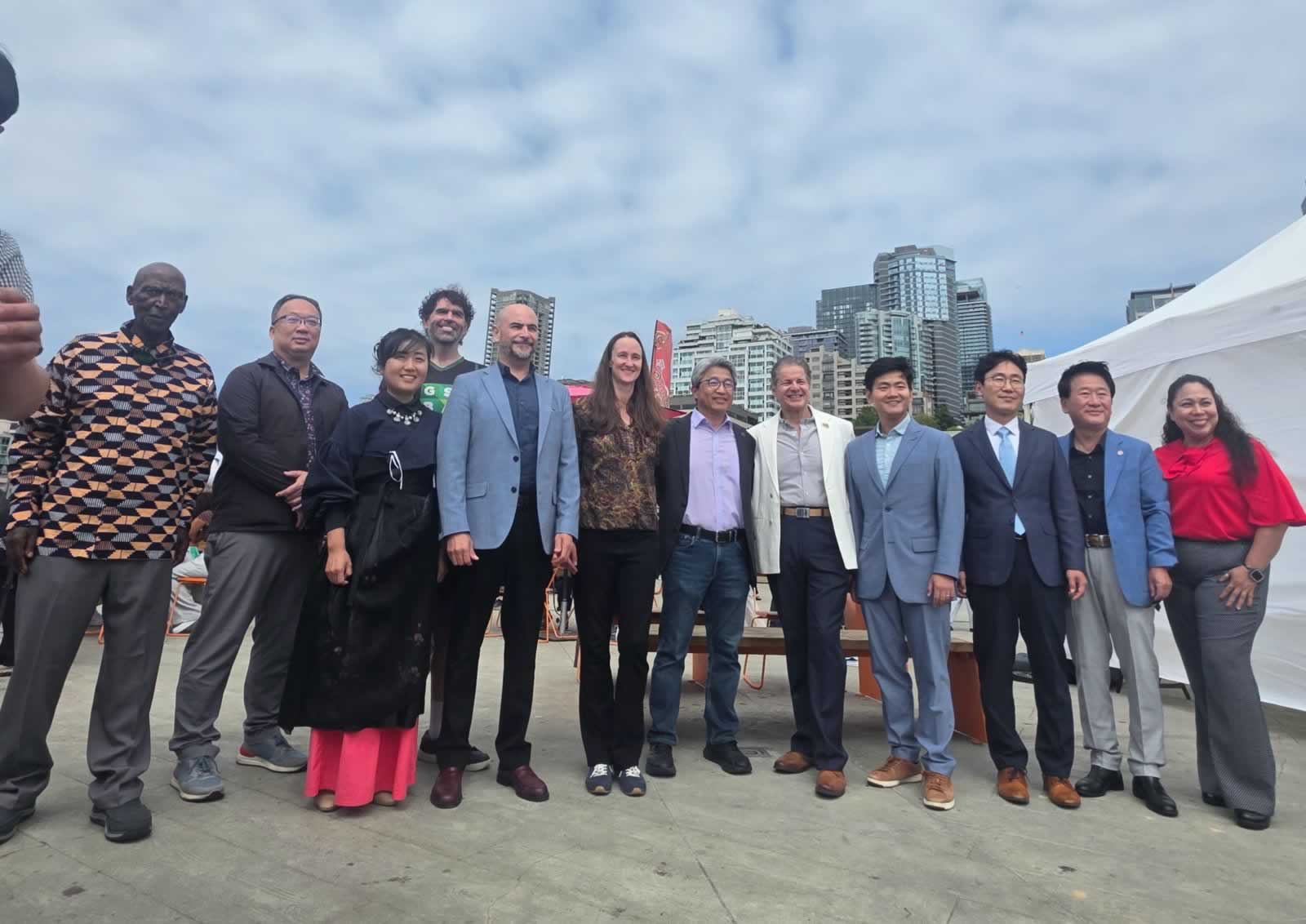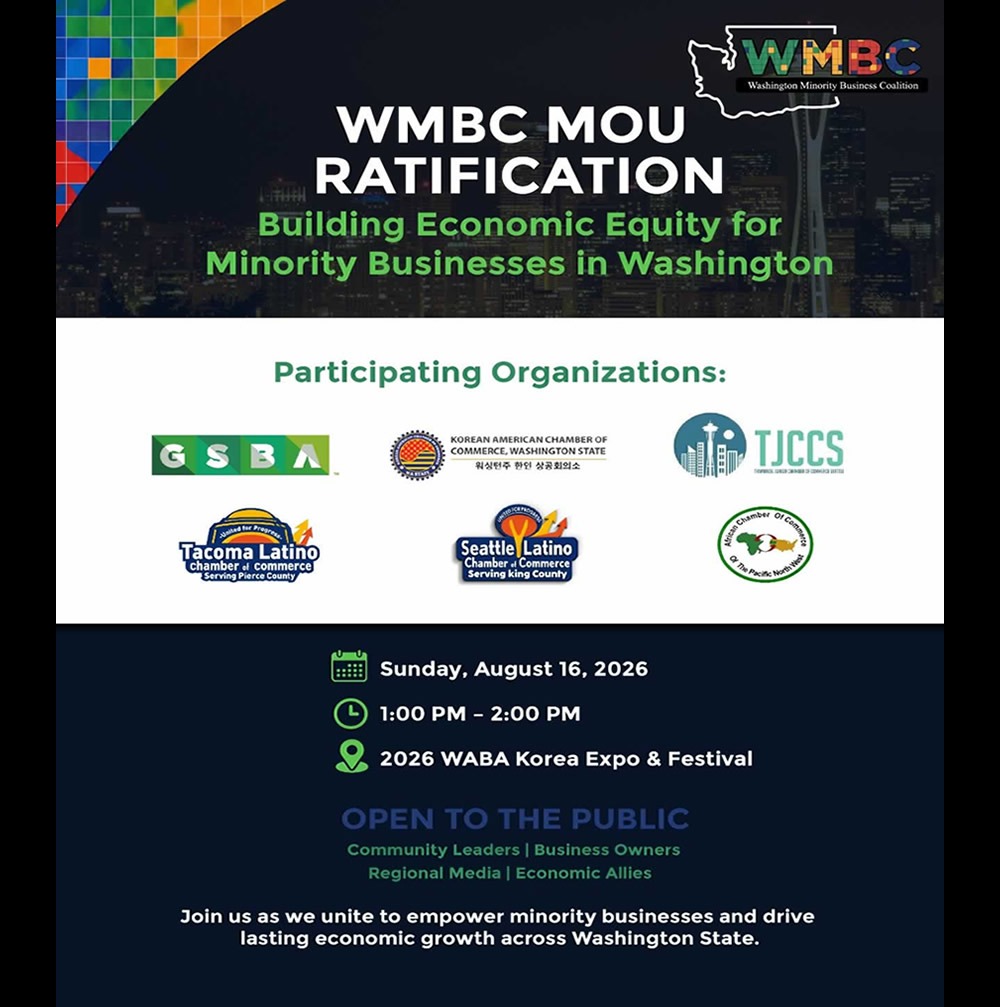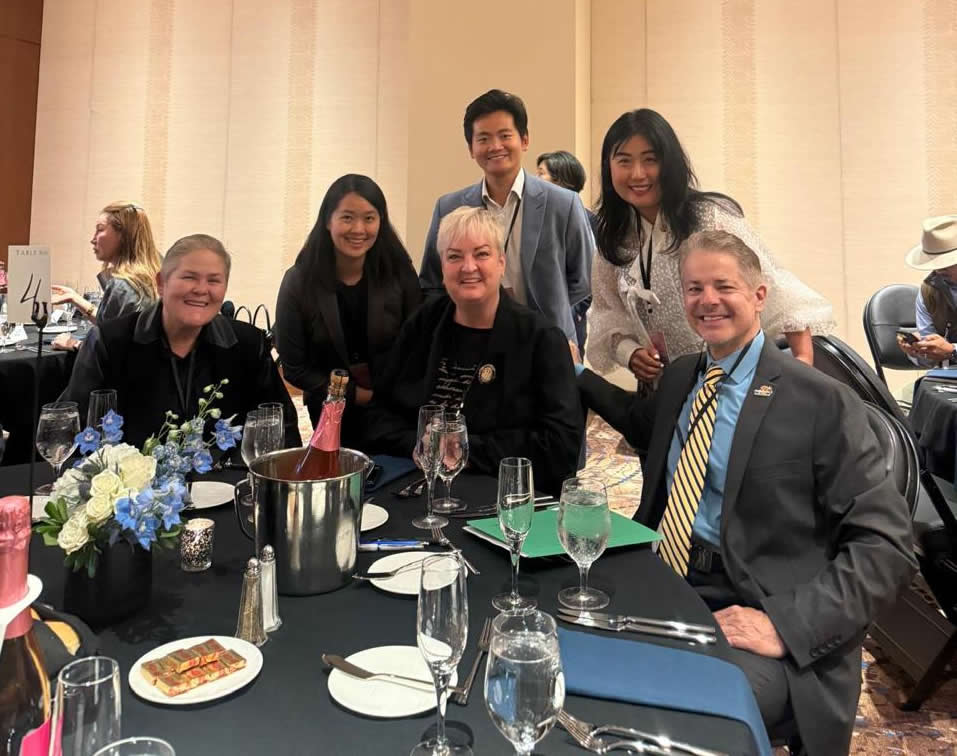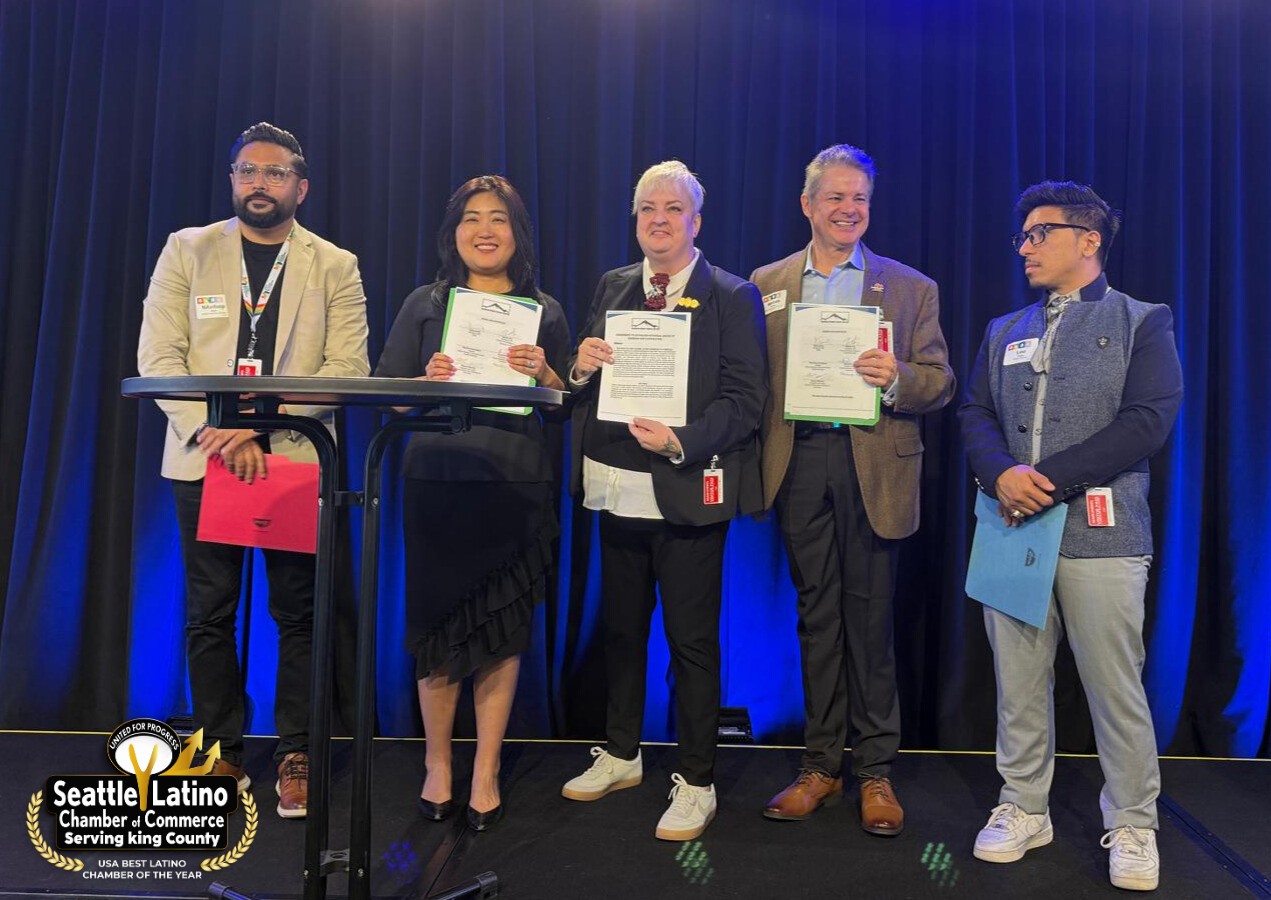
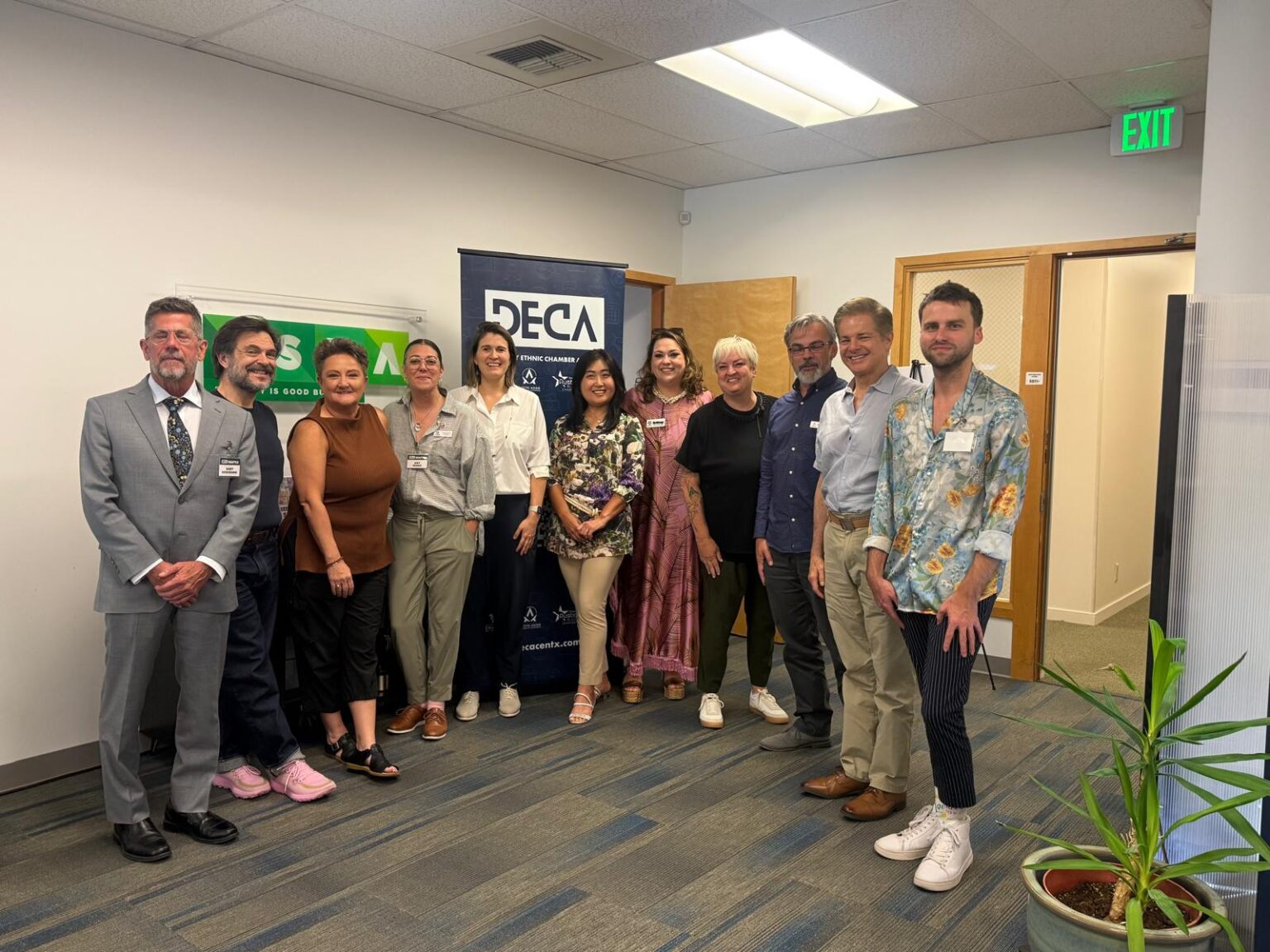
The Seattle Latino Metropolitan Chamber of Commerce participated in a working session between the Washington Minority Business Coalition (WMBC) and the Diversity Ethnic Chamber Alliance (DECA) from Austin, Texas. The meeting, held in Seattle, also included the Greater Seattle Business Association (GSBA), the Korean American Chamber of Commerce of Washington, the Greater Austin Hispanic Chamber of Commerce and the Austin LGBT Chamber of Commerce.
The discussion focused on coalition-building among minority chambers of commerce, the alignment of economic strategies, and the need to improve access to capital, business development opportunities, and government and corporate contracts. WMBC members described the importance of a unified approach in addressing inequities in funding and representation. “It’s not about anything else. It’s about business,” said Marcos Wanless, President of the Seattle Latino Metropolitan Chamber of Commerce. “From food to sports to entertainment, everything is business. Even politics.”
Participants shared experiences on how each chamber connects with its community and how these approaches can complement one another. Wanless emphasized that the coalition exists to address disparities in resources: “If you compare the resources flowing from city, county, and state governments to our organizations, it’s absolutely minimal. We need to gather voices because that’s the way we do it in America. The first question elected officials ask is: how many are you?”
DECA representatives presented their Regional Equity and Economic Development (REED) Plan, a framework developed to set measurable goals across multiple chambers and to complement existing regional strategies. WMBC outlined its own steps for coalition-building, from defining the core team to creating joint sponsorship proposals tailored to each community’s needs. Recent accomplishments cited included the launch of state-level LGBTQ+ business certification in Washington, advocacy for a local childcare funding measure, and the creation of a $1 million loan fund for member businesses.
The meeting concluded with a commitment to continue joint advocacy and collaborative projects. “Minority-owned businesses are already shaping the future of the economy,” Wanless stated. “Our role is to help them reach their potential by creating strategies that channel resources, attract major players, and build capacity.” The Seattle Latino Metropolitan Chamber of Commerce will remain active in WMBC’s initiatives and will seek further partnerships to strengthen the economic participation of the Latino business community.